Forton Furniture
Mixing dining chairs can make a room feel collected, personal, and comfortably lived in. However, variety works best when it follows a clear visual plan. In this guide, we explore How to mix and match different chair styles in a dining room without creating unnecessary clutter. You might pair upholstered host chairs with simple wooden side chairs, or combine curved backs with clean, straight lines. The goal is not perfect uniformity. It is a conversation between shapes, materials, colors, and proportions.
Start with the dining table, because its size and finish establish the room’s visual direction. A heavy oak table may suit woven seats, painted chairs, or gently curved designs. Keep at least one feature consistent, such as seat height, wood tone, or upholstery color. This creates rhythm around the table. I have found that two contrasting chair styles often look intentional, while four unrelated styles can feel accidental. Yet this is not an absolute rule. A relaxed farmhouse room may welcome more variation, especially when several chairs share similar natural textures.
Pay attention to comfort and daily use. Test how each chair supports the back, fits beneath the table, and handles frequent cleaning. A beautiful chair becomes frustrating when it rocks or blocks someone’s knees. Leave enough space for chairs to move freely. Small imperfections can add character, but poor proportions are harder to forgive. Before buying a full set, place one sample chair beside the table for a day. Observe it in morning light, evening shadows, and real family use. That quiet test may change your entire plan.
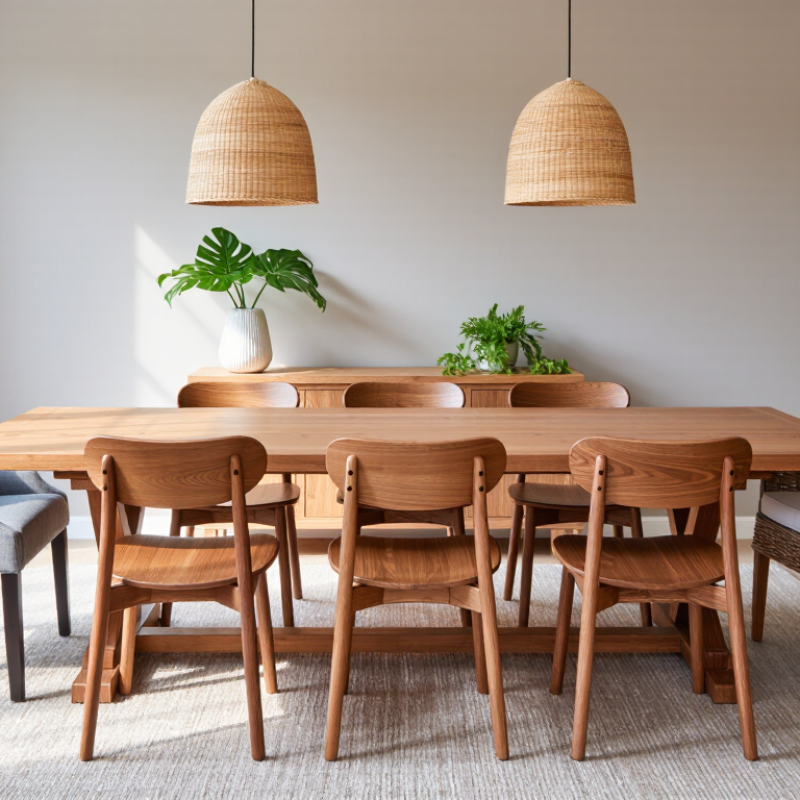
A cohesive dining room begins with a design direction, not a matching chair set. Choose one visual anchor, such as warm oak, black metal, or woven texture. Then let the chairs vary within that boundary. In practice, a rectangular oak table can support curved upholstered chairs, slim wood side chairs, and one darker accent chair. The shared tone keeps the arrangement intentional.
Recent data supports restrained mixing. Houzz’s 2024 U.S. Kitchen Trends Study reported transitional style at 25%, narrowly ahead of modern style at 24%. This suggests that many homeowners prefer balanced interiors rather than extreme decoration. The National Kitchen & Bath Association’s 2024 Design Trends Report also highlighted natural materials, layered textures, and warmer neutral palettes. Apply these findings carefully. Repeat one material across at least three chairs, while changing only one feature, such as shape or upholstery.
Keep the strongest contrast at the table ends. Two sculptural armchairs can create a visual frame, while simpler chairs maintain comfort along the sides. A difference of two inches in seat height may feel awkward, so measure before ordering. Leave about 24 inches of table width per diner, based on common space-planning practice. That rule is practical, not sacred. I have seen perfectly measured rooms feel cold when every chair looks identical. A slightly imperfect mix can feel more lived-in, especially when the colors share a quiet undertone.
A mixed dining set works when chair shapes, heights, and proportions share a quiet relationship. Start with the table, not the chairs. Measure its height, apron depth, and leg position. BIFMA’s G1-2013 ergonomic guidance places typical dining seat heights near 17 to 19 inches. Keep every seat within this range. A two-inch difference can feel surprisingly awkward during a long meal. Armrests also need clearance beneath the tabletop. Allow roughly 7 inches between the seat and table underside for comfortable movement.
Shape creates rhythm around the table. Pair curved end chairs with simpler side chairs, but repeat one detail, such as woven texture or a dark frame. Around a rectangular table, taller-backed chairs can anchor the ends. Lower profiles along the sides protect sightlines and make the room feel wider. The 2024 Houzz & Home Study shows that 54% of renovating homeowners hired specialty professionals. That figure supports a practical lesson: measurement often matters more than visual instinct.
I still misjudge scale sometimes. A chair can look elegant alone, then crowd the table. Leave about 24 inches of table width per diner, based on common space-planning guidance. Test the arrangement with place settings before buying every chair. Sit down. Pull each chair out. Check knees, elbows, and passing space. One imperfect chair may be useful during this test. It exposes the proportions you wanted to ignore.
What Is the Best Way to Mix Dining Chair Styles?
Coordinate colors, materials, and textures before mixing chair silhouettes. A restrained palette keeps variety intentional. Choose one anchor color, then repeat it in smaller details, such as piping, artwork, or tableware. The 2024 American Society of Interior Designers Trends Outlook emphasizes personalization and natural materials in residential interiors. That supports combining oak, woven fibers, and painted finishes without forcing identical pieces together.
Keep contrast measurable. Use two chair shapes, not five. Let three chairs share a related tone, while one introduces a deeper shade or tactile finish. The U.S. Environmental Protection Agency reports that indoor pollutant levels can be two to five times higher than outdoor levels. Select low-emitting finishes and washable upholstery, especially around children. Textured fabric looks inviting, but heavy grooves can trap crumbs.
Scale matters more than matching. Check seat height, arm clearance, and visual weight before buying a mixed set. A 2023 National Kitchen & Bath Association design report identified layered textures and comfortable seating as continuing residential priorities. I would test one chair at the table for several days. Daylight can expose an awkward color difference. My own mistake was pairing two “warm” woods that looked nearly identical, yet clashed under evening lighting. Slight imperfection can feel collected. Randomness usually feels unfinished.
Coordinate colors, materials, proportions, and textures to create a collected dining area without visual clutter.
| Chair Style | Best Color Direction | Recommended Material | Useful Texture | Suggested Share of the Set | Works Well With | Clutter-Control Tip |
|---|---|---|---|---|---|---|
| Upholstered Side Chair | Warm neutrals, muted green, soft blue, or a color pulled from the room | Textile upholstery with a solid wood or metal frame | Woven fabric, boucle-style texture, or subtle linen-like weave | 40%–60% | Wood chairs, wishbone-inspired chairs, and simple painted chairs | Use a restrained pattern or a single upholstery color to keep the room visually calm. |
| Wooden Ladder-Back Chair | Natural wood tones, black, cream, or a color that repeats elsewhere | Solid wood or wood veneer with a durable finish | Visible grain, smooth finish, or a woven seat | 20%–40% | Upholstered chairs and streamlined metal-frame chairs | Match the undertone of the wood rather than forcing every piece to have the same finish. |
| Woven-Seat Chair | Natural tan, honey, charcoal, or soft white | Wood, rattan, cane, or another plant-based woven material | Open weave, cane pattern, or braided seat texture | 20%–40% | Plain upholstered chairs and solid wood dining tables | Keep other textiles simple so the woven seat remains the main tactile detail. |
| Metal-Frame Chair | Black, bronze, gray, cream, or one controlled accent color | Powder-coated steel, painted metal, or metal with a wood seat | Matte, brushed, or lightly distressed surface | 20%–30% | Wooden chairs and upholstered chairs in a coordinated palette | Repeat the metal finish in lighting or hardware instead of adding several new finishes. |
| Armchair | A slightly deeper version of the room’s main color or a quiet neutral | Upholstered fabric, leather, wood, or a combination | Soft upholstery, smooth leather, or a subtly nubby textile | 10%–20% | Matching or closely related side chairs at the remaining seats | Use armchairs at the table ends to create a clear visual hierarchy. |
| Painted Accent Chair | One accent shade repeated in artwork, rugs, curtains, or tableware | Painted wood or coated metal | Gloss, satin, or lightly distressed paint | 10%–20% | Neutral upholstered chairs and natural wood seating | Limit the accent color to one chair style or one pair to avoid a random appearance. |
| Bench Seating | Wood, neutral upholstery, or a tone related to the dining table | Wood, upholstered fabric, or a combination of both | Smooth wood, woven fabric, or low-pile textile | One bench per table is usually enough | Simple side chairs with similar seat height and visual weight | Choose a bench with a clean silhouette so the table remains easy to enter and use. |
Practical coordination rule: Keep at least two elements consistent across the seating group, such as seat height and color family, while varying only one or two features, such as silhouette or material. For comfortable everyday use, dining seats commonly work best when their seat heights are close enough to support a consistent table relationship.
A mixed dining set works best when comfort leads the styling. Choose one shared feature, such as seat height, wood tone, or curved backs. Then vary the silhouette. Place upholstered armchairs at the table ends. Use slimmer side chairs along the longer edges. This creates a gentle visual rhythm without making every seat identical.
The 2024 Houzz U.S. Kitchen Trends Study identifies upgraded seating as part of today’s multifunctional kitchen planning. The NKBA 2024 Kitchen Trends Report also highlights flexible spaces and mixed materials. These findings support a practical approach: dining chairs should serve meals, conversations, homework, and longer gatherings. Test each chair for ten minutes. Notice pressure behind the knees. Check whether your feet rest flat.
Small details matter. Keep seat heights within roughly two inches. Align the top lines of neighboring chairs when possible. A woven chair beside a smooth upholstered chair can add useful texture. Metal legs may balance a heavy wooden table. Too much contrast feels accidental.
I have made that mistake. The room looked interesting, but guests moved constantly. Comfort exposed the design problem. Measure the table apron, arm width, and walking clearance before buying. BIFMA seating guidelines use structured load and durability testing, but real homes add different challenges. Children climb. Guests lean back. Daily use is less predictable. A slightly imperfect mix can feel more welcoming, provided every chair still supports the body.
Mixing dining chair styles works best when the room still feels intentional. Begin with spacing, not decoration. Leave about 24 inches between chair centers, so guests can sit without bumping elbows. Allow at least 36 inches behind each chair for comfortable movement. I have found that a beautiful combination can feel awkward when the table is too crowded. That mistake is easy to overlook.
Use one shared feature to connect different chairs. Similar wood tones, seat heights, or fabric textures can create balance. For example, pair curved upholstered chairs with simpler wooden seats, then repeat one color through cushions or nearby artwork. Avoid matching every detail. A little tension gives the dining area character. Too much contrast may look accidental.
Lighting should support the arrangement rather than compete with it. Hang a pendant low enough to define the table, but high enough to protect sightlines. Warm, layered light makes mixed materials appear more cohesive at night. Add a wall light or dimmable lamp if the corners feel flat. Decorative details should remain useful: a low centerpiece keeps conversation open, while a textured rug visually anchors the chairs. I once preferred a large centerpiece, but it made serving uncomfortable. Smaller objects worked better. Leave some space untouched.
Start with the table, not the chairs. Measure its height, apron depth, and leg position. Scale can deceive.
Keep dining seats near 17 to 19 inches high. A two-inch difference may feel awkward during a long meal.
Allow roughly 7 inches between the seat and tabletop underside. Pull each chair out before deciding.
Pair curved end chairs with simpler side chairs. Repeat one detail, such as woven texture or a dark frame.
Taller backs can anchor rectangular table ends. Lower side chairs protect sightlines and make the room feel wider.
Allow about 24 inches of table width per person. Test place settings before buying the complete set.
Choose one anchor color and use two chair shapes. Let one chair introduce a deeper shade or tactile finish.
Oak, woven fibers, and painted finishes can work together. Keep their visual weight reasonably balanced.
Choose washable upholstery and low-emitting finishes. Textured fabric feels welcoming, but deep grooves trap crumbs.
Test one chair for several days in changing daylight. Sit, pull it out, and check knees, elbows, and passing space. I still misjudge scale sometimes.
Mixing dining chair styles works best when the room follows a clear design direction, such as relaxed modern, rustic, classic, or eclectic. How to mix and match different chair styles in a dining room begins with choosing a shared visual element, then balancing differences in shape, height, and proportion around the table. Chairs do not need to match exactly, but they should feel comfortable together and suit the table’s scale.
Create harmony by repeating one or two colors, materials, or textures while limiting overly competing details. You might combine wood, upholstered, or woven chairs if their finishes connect naturally. Arrange contrasting silhouettes to create visual rhythm, keeping enough space for movement and allowing every seat to function comfortably. Finally, refine the dining area with thoughtful spacing, layered lighting, and a few decorative accents that support the overall mood. The result should feel collected and personal rather than random, with variety adding character while consistency keeps the space visually calm.
