Forton Furniture
Wine on velvet can turn a relaxed evening into a stressful cleaning problem. The dark mark spreads quickly between the fabric’s soft, raised fibers. Velvet also reacts differently to moisture, pressure, and heat than ordinary upholstery. A careless scrub may flatten the pile or create a larger ring.
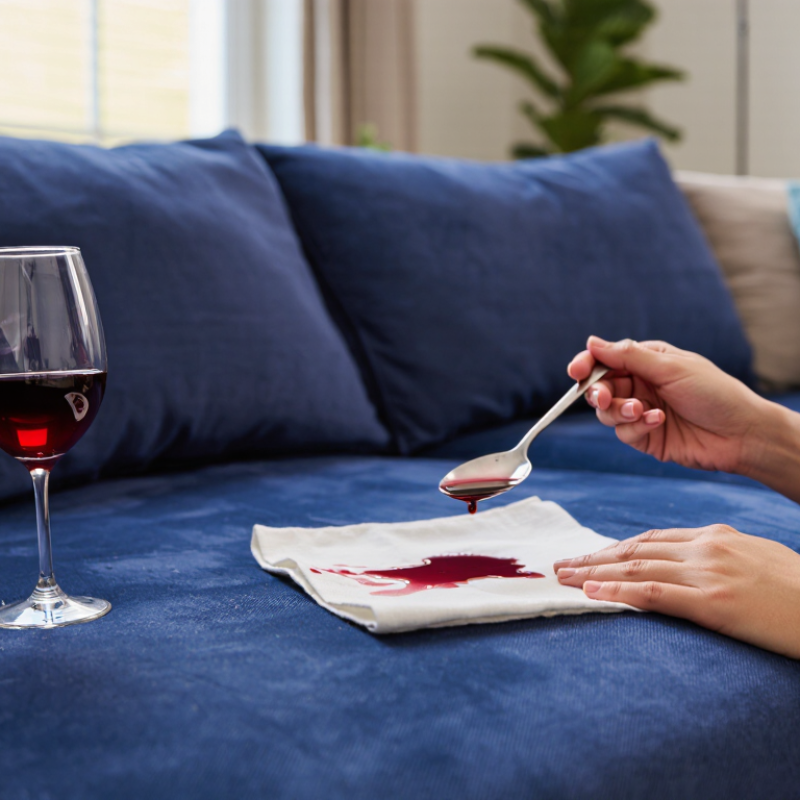
This guide explains How to remove wine stains from a velvet sofa using practical, low-risk techniques. Kadi Dulude, founder of Wizard of Homes, advises, “The sooner you treat a stain, the better your chances of removing it.” That principle matters here. Fresh red wine should be gently blotted with a clean white cloth, not rubbed across the cushion. A dull spoon can lift spilled liquid without pressing it deeper. Small steps matter.
Experience also shows that velvet requires patience. Test every solution on a hidden seam first. Watch for color transfer, shrinking, or a stiff patch after drying. Water alone may help with a fresh spill, but some velvet fabrics need professional care. The sofa’s cleaning label should guide every decision. Manufacturer instructions outrank internet shortcuts.
These seven methods focus on controlled blotting, careful moisture use, suitable household materials, and professional escalation. None is guaranteed for every velvet blend. Even careful work can leave a faint tide mark. That possibility deserves honesty. When the stain reaches the backing, remains after treatment, or covers a large cushion, a certified upholstery cleaner is the safer choice. Fresh cloths, gentle pressure, and a cool drying environment can protect the sofa’s texture while improving the chance of recovery.
Before treating a wine stain, identify the velvet’s fiber and upholstery code. Velvet may contain cotton, silk, rayon, polyester, or a blend. Each fiber reacts differently to moisture, friction, and cleaning solvents. Check the care label, then test an unseen seam. Fabric can surprise you.
The code W permits water-based cleaning. WS allows water-based or solvent-based products. Code S requires a suitable solvent, while X means vacuuming only or professional cleaning. Never use water on X velvet. It can leave rings, flatten the pile, or cause dye bleeding.
For W or WS velvet, gently blot fresh wine with a white, absorbent cloth. Do not rub. Mix a small amount of mild detergent with distilled water, dampen the cloth lightly, and work from the stain’s edge inward. Press, lift, and repeat.
For S velvet, follow the label and use minimal solvent in a ventilated room. Keep the fabric barely damp. Silk and rayon velvet need extra caution because their fibers may weaken or develop permanent marks. A professional upholstery cleaner is safer for old stains, large spills, or uncertain labels.
I once underestimated how quickly velvet’s pile changes under pressure; that mistake taught me to use lighter touches. Slow cleaning is not wasted time. Even a correct method can fail when the dye is unstable, so stop if color transfers to the cloth.
Red wine can mark velvet quickly, so blotting immediately is the safest first response. The International Organisation of Vine and Wine reports that most red wines fall near pH 3–4, making them distinctly acidic. This acidity can interact with dyes, finishes, and natural fibers. It does not create the stain alone, but it can help pigments settle into the pile.
Press a clean, white, absorbent cloth onto the spill. Lift straight up. Do not rub. Rubbing can spread anthocyanin pigments and flatten velvet fibers at the same time. Replace the cloth as it becomes damp. Keep the pressure gentle, especially on cotton or silk velvet. A textile-care technician would usually limit moisture because excessive water may leave a tide mark or loosen the backing.
Work from the outer edge inward. Slowly. If the spill is still fresh, use a barely damp cloth with cool distilled water after blotting. Test an unseen seam first. The American Cleaning Institute recommends checking colorfastness before applying any cleaning solution, while professional upholstery guidance generally favors minimal liquid and controlled agitation. I have found that patience helps, but one mistake matters: repeated pressing with a colored towel can transfer dye. Stop if the velvet changes color, feels sticky, or develops a ring. At that point, professional upholstery assessment is more reliable than aggressive home treatment.
Water can help, but velvet punishes careless moisture. Check the sofa’s care label before touching the stain. If water is allowed, use cool distilled water on a white cloth. Tap the wine mark gently from the outside inward. Never scrub the pile. I once used too much water, and the velvet dried with a pale ring. That mistake changed my method.
Test the cloth first. Choose a hidden area behind the sofa or beneath the cushion. Wait until it dries completely. For detergent, mix one drop of mild, clear soap with a cup of cool water. Dampen the cloth lightly, then blot the remaining stain. Keep the velvet barely moist. Press with a dry towel after each pass. If the label permits solvent cleaning, use only a fabric-approved solvent and follow its directions exactly. Apply it to the cloth, not directly to the velvet. Work beside an open window, and stop if the color transfers. A professional upholstery cleaner is safer when the label says solvent-only or gives no clear guidance. Velvet can appear clean while its backing remains wet, so allow full air drying before judging the result. My own instinct is to repeat a treatment too quickly; patience is usually the more reliable choice.
| Method | Best For | Materials and Ratio | Application Steps | Typical Contact Time | Main Risks | Care-Code Guidance |
|---|---|---|---|---|---|---|
|
Method 2 Distilled-water blot test |
Fresh, small wine spots on velvet that is labeled water-cleanable. | Distilled or deionized water; several clean, white, lint-free cloths. |
1. Remove excess wine by blotting, never rubbing. 2. Test a hidden area and allow it to dry. 3. Lightly dampen a cloth and blot from the outer edge toward the center. 4. Use a dry cloth to lift moisture and restore the velvet pile gently. |
Work in short passes of about 30–60 seconds; do not leave the fabric saturated. | Water rings, pile distortion, dye transfer, and spreading the stain through over-wetting. | Use only when the upholstery label permits W or WS cleaning. Avoid on S or X fabrics. |
|
Method 3 Mild-detergent foam |
Dried or persistent wine residue on water-cleanable, colorfast velvet. | Mix approximately ¼ teaspoon of clear, dye-free mild detergent with 1 cup (240 ml) of lukewarm distilled water. Use the foam rather than the liquid whenever possible. |
1. Vacuum or brush away loose residue without pressing into the pile. 2. Patch-test the mixture in an unseen area. 3. Whip the solution to create foam, then pick up a small amount with a cloth. 4. Blot the stain gently from the outside inward. 5. Remove detergent residue with a separate cloth barely dampened with distilled water. |
About 1–2 minutes per light application; repeat only after the area has been blotted nearly dry. | Soap residue, darkening, water marks, flattened fibers, and color bleeding from excessive moisture or agitation. | Appropriate only for W or WS labels after a hidden-area test. Do not scrub or use powdered detergent. |
|
Method 4 Solvent-safe treatment |
Velvet labeled solvent-cleanable, especially when water causes visible rings or changes the pile. | A solvent specifically approved for upholstery by the fabric-care instructions; clean white cloths and good ventilation. |
1. Read the upholstery care label and the solvent directions fully. 2. Test an inconspicuous area and wait until completely dry to check for color or texture changes. 3. Apply a small amount to a cloth, never pour it directly onto the sofa. 4. Blot the stain lightly, changing to a clean section of cloth as wine transfers. 5. Allow the area to air-dry naturally and brush the pile gently in its original direction. |
Follow the product label; use several light applications rather than one heavily wetted application. | Fire risk, fumes, discoloration, adhesive damage, and permanent pile or backing damage if the wrong solvent is used. | Intended for S or WS fabrics only when permitted by the manufacturer. Never use solvents on X fabrics; professional cleaning is safer for valuable or delicate velvet. |
Important: Always check the sofa’s care label before applying moisture or solvent. Blot instead of rubbing, avoid heat and steam, and seek professional upholstery cleaning for antique, silk, rayon, crushed, or non-colorfast velvet.
Vinegar can help with a fresh red wine mark, but velvet needs restraint. Mix one part white vinegar with three parts cool water. Dab the solution onto a hidden seam first. If the color transfers, stop. Press a white cotton cloth onto the stain, working from the outside inward. Do not rub. Rubbing can flatten the pile and spread the wine. I have found that vinegar sometimes reduces odor but leaves a faint sour smell when overused.
An oxygen cleaner may work better on washable polyester velvet. Choose a product labeled for upholstery, and dissolve only a small amount in cool water. Patch-test it behind the sofa before treating the visible area. Apply foam rather than soaking liquid, then blot with a clean towel. Avoid oxygen cleaners on silk, viscose, or velvet with uncertain fiber content. They can lighten dyes or create pale rings. The result is not always even.
Extraction is the most controlled option for a large or older stain. A low-moisture upholstery extractor can lift residue after gentle pretreatment. Keep the nozzle moving, and make only one slow pass. Too much water may reach the backing, causing shrinkage, odor, or a stiff texture. Dry the cushion upright with circulating air, then brush the nap in one direction. In my experience, home extractors can leave velvet wetter than expected, so professional cleaning is safer when the stain covers a full cushion.
7 Best Ways to Remove Wine Stains from Velvet Sofa?
Wine on velvet needs restraint, not aggressive scrubbing. Blot immediately with a white, absorbent towel. Lift loose residue with a dull spoon. Do not rub. Press from the stain’s edge inward, replacing damp towel sections often. A small amount of distilled water may loosen fresh residue, but excessive moisture can flatten velvet and create rings.
Under IICRC S300 upholstery guidelines, dry inspection comes before chemical treatment. Identify the fiber, backing, pile direction, dye stability, and previous damage. Polyester deserves special attention because the Textile Exchange 2024 Materials Market Report identifies it as 57% of global fiber production in 2023. Velvet may look similar while reacting very differently. Test any approved upholstery solution on a hidden area. Watch for dye transfer, texture change, and watermarking. Document the result.
Use controlled moisture, gentle extraction, and slow air movement. Avoid heated air, harsh brushing, and household bleach. Less water wins. The U.S. Environmental Protection Agency recommends indoor relative humidity between 30% and 50%, which supports safer drying conditions. Keep the cushion uncovered while it dries, then reset the nap with a soft upholstery brush. Inspect again under angled light. A practical warning: even careful cleaning may leave a faint tide mark on older velvet. IICRC S300 supports informed decisions, not guaranteed stain removal.
Check the care label for the fiber and upholstery code. Velvet may contain cotton, silk, rayon, polyester, or blends. Test every solution on a hidden seam. Fabric can surprise you.
W allows water-based cleaning. WS allows water-based or solvent-based products. S requires a suitable solvent. X means vacuuming only or professional cleaning. Never use water on X velvet.
Press a clean, white, absorbent cloth onto the spill. Lift straight up. Do not rub. Replace the cloth when it becomes damp. Work from the outside edge inward.
Rubbing can spread wine pigments across the pile. It can also flatten the fibers and create shiny patches. Use gentle, vertical pressure instead. Slowly.
Mix a small amount of mild detergent with distilled water. Dampen a white cloth lightly. Press and lift from the stain’s edge inward. Avoid soaking the backing. Stop if dye transfers.
Mix one part white vinegar with three parts cool water. Patch-test a hidden seam first. Dab lightly with a white cloth. Vinegar may reduce odor, but overuse can leave a sour smell. The result may remain uneven.
No. Use it only on suitable, washable polyester velvet. Choose an upholstery-labeled product. Apply foam instead of soaking liquid. Avoid it on silk, rayon, or uncertain fibers. It may lighten dyes.
Extraction suits large or older stains when moisture is carefully controlled. Keep the nozzle moving during one slow pass. Excess water can cause odor, shrinkage, or stiffness. Home machines may leave velvet wetter than expected. Professional cleaning is safer for full cushions.
Dry the cushion upright with circulating air. Do not press it repeatedly while wet. Once dry, brush the nap in one direction. I once underestimated pressure. Lighter touches work better.
How to remove wine stains from a velvet sofa depends on the fabric type and upholstery cleaning code. First, identify whether the velvet is labeled W, S, WS, or X, since each code allows different treatments. Blot fresh wine immediately with a clean, absorbent cloth instead of rubbing, which can spread the stain and crush the fibers. Because red wine is typically acidic, with a pH of about 3–4, quick action is important. Always test water, mild detergent, or a solvent-safe solution on a hidden area before treating the visible stain.
For older or stubborn marks, carefully compare diluted vinegar, a fabric-safe oxygen cleaner, or controlled extraction, using only the method permitted by the upholstery code. Apply minimal moisture and avoid soaking the cushion or backing. After cleaning, blot away residue, restore the velvet pile gently, and allow the sofa to dry naturally with good airflow. Finally, inspect the fabric in bright light for remaining discoloration, texture changes, or water rings, following careful upholstery-cleaning principles.
