Forton Furniture Forton Furniture

7 Best Fixes Why Your Cabinet Door Is Not Closing Properly?

Time:2026-09-29 Author:Charlotte
0%

Why is my cabinet door not closing properly? This simple question often points to a small alignment problem, not a failed cabinet. A loose hinge screw, a swollen door edge, or an uneven cabinet box can interrupt the closing path. Even a few millimeters can create rubbing, gaps, or a stubborn latch.

Tom Silva, a respected master carpenter and This Old House expert, has often emphasized, “Small adjustments make a big difference in cabinet installation.” That principle guides this practical review. The seven fixes cover tightening hinge screws, adjusting hinge depth, correcting side alignment, checking warped panels, clearing obstructions, replacing damaged hinges, and leveling the cabinet. Each solution begins with observation. Look for fresh scratches, uneven gaps, loose hardware, or paint buildup around the frame.

Do not force the door. That can strip screws or worsen a bent hinge. Try one adjustment at a time, then close the door slowly. A screwdriver, level, flashlight, and soft cloth usually provide enough support. Sometimes the problem is not the hinge at all. I have seen doors blamed for uneven flooring, crowded shelves, and swollen wood after humidity changes. That detail is easy to miss. Still, no checklist catches every case. If the cabinet box has shifted or the panel is badly warped, professional repair may be wiser than repeated adjustments. The goal is not merely a closed door. It is a quiet, even, durable fit.
7 Best Fixes Why Your Cabinet Door Is Not Closing Properly?

Common Causes of a Cabinet Door That Will Not Close Properly

7 Best Fixes Why Your Cabinet Door Is Not Closing Properly?

A cabinet door often refuses to close because its hinges have loosened. Start with the hinges. Check each screw while supporting the door gently. Tighten loose screws, but stop when the hinge sits firmly. Over-tightening can strip the cabinet material. Adjustable hinges may also shift after repeated use. Turn their adjustment screws slightly, then test the door after every change.

Look closely at the door edges. Uneven gaps can indicate a warped door, a crooked cabinet box, or a sagging hinge. A door rubbing the top corner usually needs vertical adjustment. Rubbing the hinge side may require depth or side-to-side correction.

Shelves, stored pans, or loose hardware can block the closing path. Remove the obstruction before changing the hinges. It happens more often than expected.

Magnets and catches can also move out of alignment. Their contact points should meet without forcing the door. If the latch sits too far forward, repositioning it may restore smooth closure. Check whether the cabinet itself is level, especially after flooring or wall repairs. A small spirit level can reveal a surprising tilt. I have seen repairs fail because only the door was adjusted. Sometimes the cabinet frame is the real problem. When screws spin freely or the wood is damaged, stop forcing them and use a suitable repair method.

Check the Door, Hinges, Frame, and Cabinet Box for Misalignment

A cabinet door that rubs, drifts open, or leaves a wedge-shaped gap may not have a hinge problem alone. Close it slowly and watch where the gap changes. Check whether the door is warped, its corners sit square, and its edge touches the frame at one point. A small twist can make a sound door look badly hung.

Inspect the hinges next. Look for loose screws, bent arms, or different adjustment positions. The Kitchen Cabinet Manufacturers Association’s ANSI/KCMA A161.1 performance standard includes a 25,000-cycle door-opening test, underscoring how much repeated movement hardware must handle. Still, a screw adjustment is not a diagnosis. Check that the face frame is level and that the cabinet box has not shifted or racked; compare its diagonals with a tape measure. A box pulled out of square can push several doors out of line.

Use a short level on the cabinet sides and top, then check the mounting screws and nearby wall. If the cabinet is loose, correct that before fine-tuning the hinges. A quick hinge tweak may hide the symptom. It can also leave uneven gaps elsewhere. Wood moves with humidity, so perfect alignment may not last; recheck after a few days, especially if the door was recently adjusted.

Adjust Hinge Screws to Correct Door Height, Depth, and Side Gaps

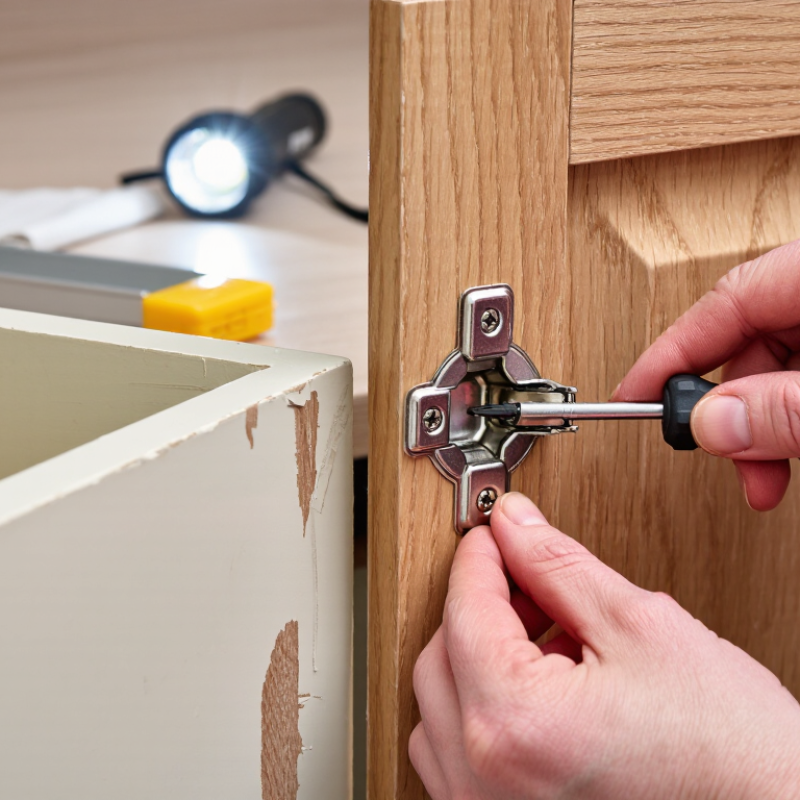
A cabinet door that rubs, hangs low, or leaves an uneven gap may need a hinge adjustment. Start by checking that the hinge and mounting screws are snug. Support the door with one hand while tightening; a loose screw can let the panel shift. Many concealed hinges offer separate adjustments for height, depth, and side-to-side position, but screw locations vary. Look closely before turning anything.

Use a screwdriver and make small changes, about an eighth of a turn at a time. The side adjustment can help even the gap between neighboring doors. The depth adjustment moves the door closer to or farther from the cabinet frame. For height, loosen the mounting-plate screws slightly, lift or lower the door, then retighten them. Make tiny changes. Close the door after each adjustment and check whether it sits flush without scraping. If the screws spin freely or the hinge plate moves, the problem may be damaged screw holes, not alignment. I have found that forcing a stubborn hinge usually makes diagnosis harder.

Tips: Mark the original screw positions with a pencil before adjusting. Change one setting at a time, and compare the top and bottom gaps. Check again. If the door still will not close, inspect for an obstructing shelf, swollen edge, or bent hinge rather than continuing to turn the screws.

Repair Loose Hinges, Warped Panels, and Obstructed Cabinet Frames

A cabinet door that will not close often needs a small, targeted repair. Start by checking the hinge screws. If they spin loosely, tighten them; if the holes are stripped, fit wooden plugs before reinstalling the screws. Adjust the hinge screws gradually, then close the door and inspect the gap along each edge. A level can reveal sag that is hard to spot by eye. Small changes matter.

A bowed or swollen panel may resist adjustment. The USDA Forest Products Laboratory’s Wood Handbook reports average shrinkage of about 4% radially and 8% tangentially from green to oven-dry, with movement varying by species. This helps explain why moisture changes can distort wood components. The EPA’s Moisture Control Guidance recommends keeping indoor relative humidity below 60%, ideally between 30% and 50%. Check for leaks, damp cleaning residue, or a nearby source of persistent moisture. Do not force a warped door flat; that can stress its joints.

Obstructions are easy to miss. Look for a protruding screw, a shifted shelf, debris on the cabinet frame, or a neighboring door catching an edge. Clean the contact points and tighten loose frame hardware. If the door still rubs, mark the contact spot with a pencil before sanding or adjusting anything. I’d recheck the alignment after each small change; doing several fixes at once makes it harder to tell what worked.

Test the Door and Prevent Future Closing Problems with Regular Maintenance

A cabinet door that will not close may have a loose hinge, a shifted cabinet, or a swollen edge. Open it slowly, then close it without pushing. Watch whether the door drops, rubs the frame, or springs back. Check the gaps around all four edges; uneven spacing can reveal misalignment. Small clues matter.

Test the hinges by gently lifting the open door. Any movement at the mounting screws deserves attention. Tighten loose screws carefully, but stop if the screw turns without gripping. A stripped hole may need a suitable repair, not more force. The National Association of Home Builders’ 2007 Study of Life Expectancy of Home Components estimates kitchen cabinets can last about 50 years, while cabinet hinges may last about 20. These are broad estimates, not guarantees, but they show why hinge checks are worthwhile.

Prevent repeat problems with a quick inspection every few months. Wipe dust and cooking residue from hinge joints, and look for rust, bent arms, or fresh screw movement. Keep the cabinet interior from pressing against the door. After cleaning, test the door several times. Smooth movement is a good sign. Still, one overlooked detail can bring the problem back: seasonal humidity may make wood swell, so recheck the gaps when the weather changes.

FAQS

Why will my cabinet door not close properly?

Loose hinges are common. A shifted shelf, swollen edge, crooked frame, or bent hinge can also block closure.

How can I check whether loose screws cause the problem?

Support the door with one hand. Tighten each screw until the hinge feels firm. Stop before the material strips.

How should I adjust a concealed hinge?

Turn one adjustment screw about an eighth of a turn. Close the door and check the gap after every change.

What does an uneven door gap indicate?

A narrow top gap may show sagging. An uneven side gap may suggest depth adjustment or a crooked cabinet frame.

What should I do if the door rubs the top corner?

Check the height setting first. Loosen the mounting screws slightly, lift the door, and retighten them carefully.

Could something inside the cabinet block the door?

Yes. Check pans, shelves, loose screws, debris, and neighboring doors. Small obstructions cause surprising problems.

How can moisture affect a cabinet door?

Damp air can swell wood edges. Check for leaks, wet cleaning residue, or moisture near the cabinet.

What if the hinge screws spin without tightening?

The screw holes may be damaged. Stop forcing the screws. A suitable wood-hole repair may be needed before reinstallation.

Should I sand a door that rubs?

Mark the contact spot first. Try alignment adjustments before sanding. Removing material too early may hide the real cause.

What if adjustments still do not work?

Check the cabinet with a small spirit level. The frame, not the door, may be tilted. I sometimes overlook that.

Conclusion

If you’re asking, “Why is my cabinet door not closing properly,” the cause may be a misaligned door, loose hinge screws, a warped panel, or something obstructing the frame or cabinet box. Start by checking whether the door sits evenly, whether the hinges are secure, and whether the cabinet frame is square. Look for uneven gaps around the door and signs that the panel rubs against the frame or nearby objects.

Many closing problems can be corrected by adjusting the hinge screws to change the door’s height, depth, or side-to-side position. Tighten loose hinges, repair damaged mounting points where possible, and clear any obstructions before testing the door again. If the panel is warped or the cabinet frame is damaged, further repair may be needed. Open and close the door several times after making adjustments, then check the screws and alignment regularly to help prevent the problem from returning.

Charlotte

Charlotte

Charlotte is a seasoned marketing professional with a deep understanding of the company's portfolio and a passion for elevating its presence in the market. With a keen eye for detail and a commitment to excellence, she ensures that our professional blog is regularly updated with insightful articles......