Forton Furniture
A platform bed can turn overlooked floor space into practical storage. Yet, many owners waste that space with mismatched boxes or hard-to-reach clutter. This guide explores how to maximize storage under a platform bed through careful planning, realistic measurements, and everyday use. The goal is not to fill every inch. It is to create storage you can access, clean, and maintain.
Start by measuring the clearance from the floor to the bed frame. Record the length, width, and usable depth, then subtract room for handles and movement. A tape measure and a simple sketch can prevent expensive mistakes. Experienced organizers often group items by frequency. Keep spare bedding near the foot of the bed. Store seasonal clothing in sealed, labeled containers. Shoes need ventilation, not just extra capacity. Under-bed drawers, woven baskets, and low rolling bins suit different floors and habits. On hardwood, soft casters may reduce scratches. On carpet, rigid wheels can drag or stall.
Reliable storage also protects the room’s air quality and your belongings. Avoid blocking vents, trapping damp textiles, or overloading homemade supports. Check the bed manufacturer’s clearance and weight guidance before adding heavy containers. This article compares safe layouts, container sizes, cleaning routines, and accessibility trade-offs. It also acknowledges an uncomfortable truth: the neatest system may fail when daily habits change. A design that looks perfect today may become frustrating next month. Leave some open space. Review the setup regularly, and adjust it when real use exposes its weaknesses.
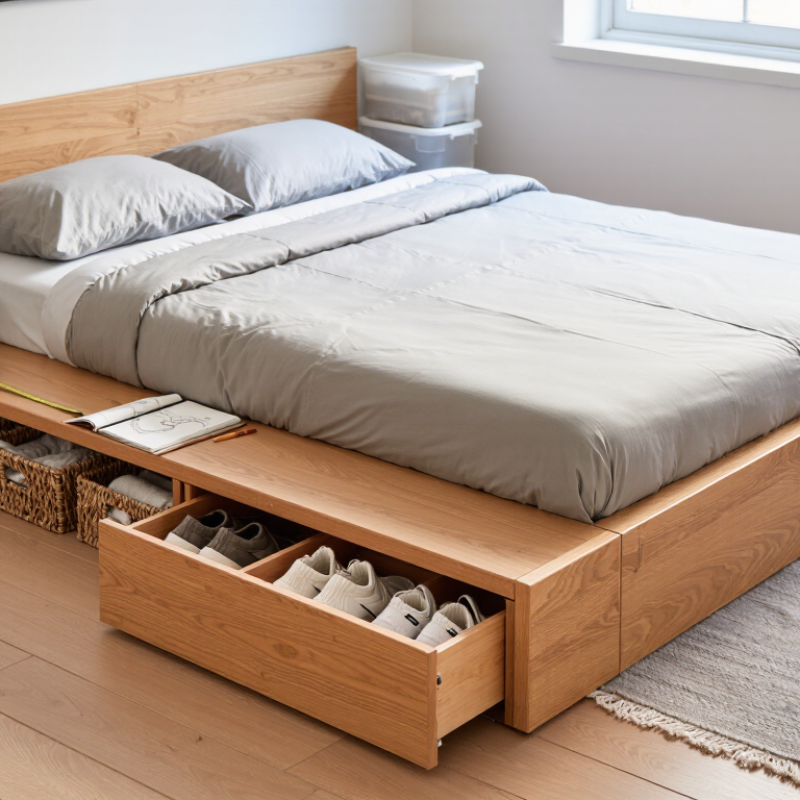
A platform bed can hide useful storage, but its capacity depends on more than floor space. Measure the clear length, width, and height beneath the frame. Record obstacles, including center supports, legs, and nearby skirting boards. My first estimate is often too generous. Real storage volume usually falls by 15–25% after allowing for handles and movement.
Multiply the usable measurements to estimate cubic capacity. A space measuring 75 by 55 by 8 inches offers about 19 cubic feet before clearance adjustments. Choose shallow containers for clothing, bedding, or seasonal shoes. Avoid packing items tightly against the floor. The U.S. Environmental Protection Agency reports that indoor pollutant levels can be two to five times higher than outdoor levels, so airflow and clean storage matter. Fabric bags may protect contents, but they can also trap moisture. That detail is easy to miss.
Tips:
Photograph the space before buying containers. Use a flashlight to inspect dust and dampness. Leave at least one inch around moving parts. Label each container by season, not by vague categories.
The National Association of Home Builders’ 2024 buyer-preference report shows strong demand for dedicated storage features, including walk-in pantries at 62%. Under-bed storage cannot replace a room, but it can reduce visible clutter. Measure twice. Mistakes happen.
Choosing containers that fit the available clearance is the key to maximizing storage under a platform bed. Measure from the floor to the lowest obstruction, such as slats or support rails. Record the shortest measurement, not the average. Leave at least 1–2 centimeters of vertical space. This prevents scraping and allows easier removal. The 2024 National Association of Home Builders report shows that 86% of buyers consider a laundry room desirable, reflecting a wider demand for practical storage zones. Under-bed space deserves similar planning.
Use containers with rigid sides, smooth bases, and secure lids. Soft bags may collapse, but they often catch on rails. Clear containers help identify spare bedding, winter clothing, or documents quickly. Choose several narrow units instead of one oversized box. Smaller units reduce lifting strain and use awkward gaps better. Avoid filling every centimeter. Air must circulate around textiles. This detail is easy to forget.
Tips: Measure twice. Check wheels before buying. Label both ends of each container. Store heavy items near the bed’s support points, not at the center. The American Academy of Orthopaedic Surgeons advises using proper lifting technique for bulky loads, so lighter containers are safer. A simple test helps: slide one container fully under the bed, then remove it without twisting your back. If that fails, the design needs revision. Clearance measurements can still be wrong. Real furniture is rarely perfectly level.
| Container Type | External Dimensions (W × L × H) |
Minimum Bed Clearance | Approx. Capacity | Best Items to Store | Space Efficiency | Fit and Access Recommendation |
|---|---|---|---|---|---|---|
| Low-profile storage box | 24 × 36 × 6 in (61 × 91 × 15 cm) |
7 in (18 cm) |
84.9 L (5,184 in³) |
Folded clothing, spare sheets, towels, and shoes | Excellent for shallow clearances | Leave at least 1 inch of vertical space so the lid or fabric cover can be removed without rubbing against the bed frame. |
| Medium under-bed bin | 18 × 36 × 6 in (46 × 91 × 15 cm) |
7 in (18 cm) |
63.7 L (3,888 in³) |
Seasonal clothing, handbags, craft supplies, and bedding accessories | Very good for divided storage | The narrower width makes it easier to pull out from either side of the bed and works well when bed legs reduce the available opening. |
| Long rolling container | 24 × 48 × 6 in (61 × 122 × 15 cm) |
7 in (18 cm) |
113.3 L (6,912 in³) |
Comforters, quilts, pillows, and bulky soft goods | Highest capacity per container | Use only when the under-bed opening is at least 49 inches long and the bed legs do not block the rolling path. |
| Medium-height lidded box | 16 × 30 × 8 in (41 × 76 × 20 cm) |
9 in (23 cm) |
63.0 L (3,840 in³) |
Books, folded denim, documents, and heavier household items | Good balance of capacity and stability | Choose a rigid box with reinforced sides when storing heavier items. Confirm that the lid does not increase the total height above 8 inches. |
| Narrow vertical container | 12 × 24 × 10 in (30 × 61 × 25 cm) |
11 in (28 cm) |
47.2 L (2,880 in³) |
Small appliances, toys, toiletries, and cleaning supplies | Useful around bed supports | Its compact footprint can fit between support rails or legs, but measure the narrowest opening rather than the overall space beneath the bed. |
| Soft zippered under-bed bag | 18 × 36 × 8 in (46 × 91 × 20 cm) |
9 in (23 cm) |
84.9 L (3,888 in³) |
Jackets, blankets, pillows, and other compressible textiles | Excellent for irregular spaces | A flexible bag can conform to minor obstructions, but avoid overfilling because bulging sides may prevent smooth access. |
| Shallow document box | 12 × 16 × 4 in (30 × 41 × 10 cm) |
5 in (13 cm) |
12.6 L (768 in³) |
Receipts, photographs, cables, manuals, and small accessories | Best for very low beds | Use several labeled boxes instead of one oversized container when the clearance is less than 6 inches or when frequent access is required. |
How to Maximize Storage Under a Platform Bed?
The most efficient approach is to organize items by frequency of use. Keep daily essentials near the foot or sides of the bed. Shoes, work bags, and spare blankets should be easy to reach. Use shallow containers for these items. They slide out without disturbing everything else. Label each container with both its contents and purpose. Easy access matters.
Move seasonal clothing, guest bedding, and holiday decorations toward the center. These items need less frequent access. Store them in sealed, breathable containers only when they are completely dry. Vacuum bags can save space, but they may crush delicate fabrics. Fold those items loosely instead. A simple rotation system helps: bring summer clothing forward in spring, then reverse it later.
Items with different storage requirements deserve separate spaces. Hard objects can share sturdy boxes, while linens need clean, ventilated fabric containers. Avoid placing heavy books directly under the bed frame. They can make removal awkward and may exceed the frame’s weight limit. Check the manufacturer’s guidance before loading the space. I once stored everything in identical boxes, which looked tidy but wasted time. I had to open six containers to find one blanket. Clear labels would have prevented that mistake. Leave a small gap around containers for airflow and easier cleaning. Dust still gathers there.
How to Maximize Storage Under a Platform Bed?
Under-bed storage works best when access is planned, not improvised. Measure the clearance first, including the bed frame and floor trim. Choose shallow containers that slide out without lifting the mattress. Clear labels help you find winter blankets without pulling out every box. I once stored everything in deep bins. That assumption failed. The back items became forgotten clutter.
Ventilation protects fabrics, books, and wooden objects from trapped moisture. The U.S. Environmental Protection Agency recommends keeping indoor humidity below 60%, ideally between 30% and 50%, to reduce mold risk. Use slatted platforms when possible, and leave small gaps between containers. Avoid packing damp linens. Let them dry completely before storage. A low-cost hygrometer can reveal a humid bedroom that feels perfectly comfortable.
Protection also depends on material and placement. Use lidded containers for dust-sensitive items, but avoid airtight plastic around anything that may retain moisture. Keep photographs and documents in archival sleeves, away from exterior walls and plumbing. The National Archives advises stable temperature and humidity for preserving paper records. Store heavy objects near the bed’s support points, not at the center of weak panels. Check the floor beneath the bed twice yearly for condensation, pests, or scratches. This inspection takes minutes. It may prevent an expensive surprise.
Estimated usable capacity is calculated from the internal dimensions of common under-bed layouts. Divided compartments improve access, a continuous ventilation gap helps reduce trapped moisture, and lidded containers provide better protection from dust.
A platform bed can provide useful storage, but its efficiency depends on regular maintenance. Dust gathers quickly beneath the frame, especially around fabric bins and rarely used corners. Every month, remove the containers and vacuum the floor, slats, and wheels. Check for moisture, damaged lids, loose handles, or sharp edges that could scratch the floor. Keep heavier items near the center to reduce uneven pressure on the bed frame.
Tips: Use clear containers for daily items and sealed containers for seasonal bedding. Label every box on two sides, so you can find it without moving everything. Leave a small air gap around stored items. Avoid packing containers tightly against walls, because poor airflow can create musty smells. Review the contents every three months and remove anything you no longer use.
I once stored winter blankets in an open fabric bag and ignored them for too long. They collected dust and needed washing before use. That mistake changed my routine. Bedding now goes into clean, breathable covers after complete drying. I also keep a simple inventory on my phone, though I sometimes forget to update it. That system is imperfect, but it prevents duplicate purchases and unnecessary searching. A stable under-bed arrangement should remain easy to inspect, lift, and clean, even when the room feels busy.
Keep daily items near the sides or foot of the bed. Shoes, work bags, and blankets should stay easy to reach. Seasonal items can go deeper.
Choose shallow containers that slide out smoothly. Use clear labels showing both contents and purpose. Deep bins can hide forgotten clutter.
Store completely dry clothing in sealed, breathable containers. Fold delicate fabrics loosely because vacuum bags may crush them. Rotate clothing during seasonal changes.
Separate linens, books, wooden objects, and hard items. Linens need clean, ventilated fabric containers. Sturdy boxes suit heavier objects.
Leave small gaps around every container. This improves airflow and makes cleaning easier. Dust still gathers there.
Keep indoor humidity below 60%, ideally between 30% and 50%. Let damp linens dry completely before storage. A small hygrometer can reveal hidden humidity.
Place heavy objects near the bed’s support points. Avoid loading weak center panels with books or dense boxes. Check the frame’s weight guidance first.
Use archival sleeves and stable containers. Keep documents away from exterior walls and plumbing. Check beneath the bed twice yearly for condensation, pests, or scratches. It only takes minutes.
Learning how to maximize storage under a platform bed begins with measuring the available clearance, width, depth, and overall access space. These dimensions help determine whether shallow boxes, rolling drawers, fabric bags, or other containers will fit without interfering with the bed frame. Store belongings according to how often they are used: keep seasonal clothing, spare bedding, and rarely needed items farther underneath, while placing frequently accessed essentials near the edges. Grouping similar items and labeling each container can also make the space easier to manage.
For better protection, choose containers with secure covers and use breathable materials when storing textiles or moisture-sensitive belongings. Leave enough room for air circulation, avoid overloading the space, and use dividers or smaller organizers to prevent clutter. A simple maintenance routine—checking for dust, moisture, damage, and unnecessary items every few months—will keep the system efficient. With careful planning and regular adjustments, under-bed space can become a clean, accessible, and practical part of your storage solution.
